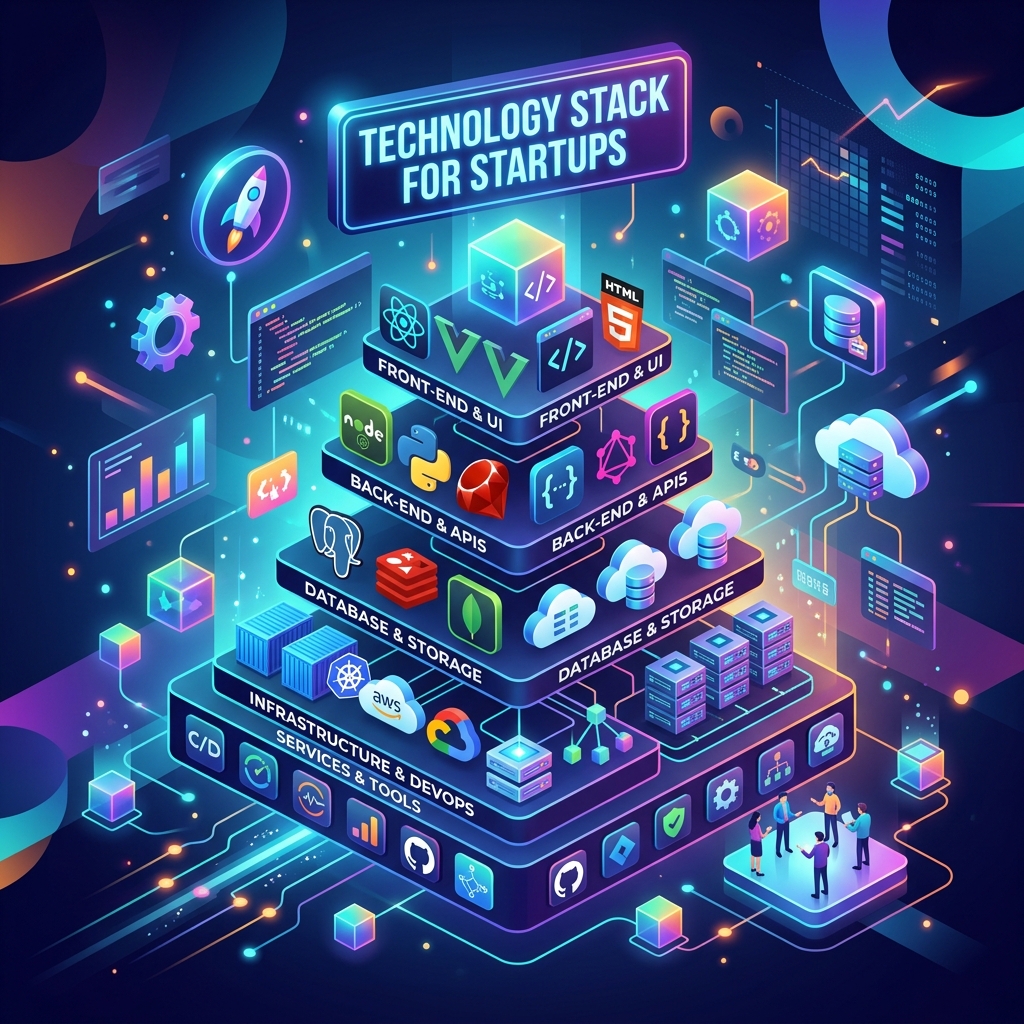
For any tech startup, the technology stack is the foundation of your digital product. A "tech stack" is the combination of programming languages, frameworks, databases, and front-end tools used to build a web or mobile application. Choosing the wrong stack can lead to massive technical debt, slow development cycles, and an inability to scale when your user base grows.
At WEB Graphics Studio, we've helped numerous startups in Mumbai and worldwide launch their products by selecting the perfect architecture. Here is our comprehensive guide to choosing the right tech stack for your startup.
1. Understand Your Project Requirements
Before you look at any technology, you need to deeply understand your product. Ask yourself:
- What is the core functionality? Is it a simple content platform, a real-time chat app, or a heavy data-processing ERP?
- What is the target platform? Do you need a web app, a mobile app (iOS/Android), or both?
- What is your timeline? Do you need an MVP (Minimum Viable Product) in 4 weeks, or do you have 6 months to build a highly customized platform?
2. Prioritize Speed to Market (MVP Phase)
For early-stage startups, speed to market is critical. You need to validate your idea with real users as quickly as possible. For rapid MVP development, established frameworks with massive community support and pre-built modules are best.
Recommended Stacks for Speed:
- MERN Stack (MongoDB, Express, React, Node.js): Excellent for fast, single-page applications. The entire stack uses JavaScript, making it highly efficient for developers.
- Laravel (PHP) + Vue.js: Laravel is arguably the most elegant backend framework, offering built-in authentication, routing, and ORM. It's incredibly fast for building robust backend systems.
3. Plan for Scalability
While you want to launch fast, you don't want your app to crash when you hit your first 10,000 users. Scalability comes in two forms: Vertical (adding more power to your server) and Horizontal (adding more servers).
If you expect massive traffic spikes or need to handle millions of simultaneous connections (like a social network or trading app), consider technologies built for high concurrency. Node.js and Go (Golang) are excellent choices for backend services that require high scalability and low latency.
4. Consider Developer Availability and Costs
You might want to use the absolute newest, cutting-edge programming language, but if you can't find developers who know it (or if they charge a massive premium), your startup will suffer. Stick to popular, widely-used languages where talent is abundant.
JavaScript (React/Node), Python (Django/FastAPI), and PHP (Laravel) boast some of the largest developer pools in the world. This ensures you can easily hire, scale your team, and maintain your code for years to come.
5. Security Requirements
If you are building a FinTech app, a healthcare portal (HIPAA compliance), or an E-Commerce platform handling sensitive payment data, security must dictate your stack. While all modern frameworks have security measures, mature frameworks like Django (Python) or Spring Boot (Java) are renowned for their strict, enterprise-level security protocols out of the box.
Conclusion
There is no "one-size-fits-all" tech stack. The best stack for your startup depends entirely on your specific business goals, timeline, and budget. Avoid chasing the latest shiny trend and focus on proven technologies that align with your product roadmap.
Need Help Architecting Your Startup?
Building a scalable product requires an expert engineering team. WEB Graphics Studio specializes in full-stack web and mobile application development.
Consult Our Tech Experts